Have you ever checked your Shopify traffic report and felt disappointed by how many visitors came from ads compared to search? That gap tells a clear story. Most new stores lean hard on paid traffic because it’s fast, but it also disappears the moment the ad budget runs dry. Shopify SEO services take a different route, building traffic that keeps arriving long after the work is done.
Rank Fam helps Shopify store owners fix exactly this problem. Store after store comes to us with strong products and decent design, but almost no organic visitors finding them through Google. That’s rarely a product problem. It’s usually a sign that Shopify SEO services were never applied properly, or never applied at all.
The Real Numbers Behind Organic Traffic Growth
Here’s something worth sitting with for a second. Organic search now drives 43% of all ecommerce traffic and converts visitors at around 2.8%, nearly three times higher than paid social channels, which typically sit closer to 1%. That gap matters because organic visitors tend to arrive already searching for exactly what you sell, rather than being interrupted mid-scroll by an ad.
Shopify itself now powers more than 5 million active stores worldwide. With that much competition for the same shoppers, Shopify SEO services aren’t a nice extra anymore. They’re often the difference between a store that grows steadily and one that stays stuck waiting for the next ad campaign to work.
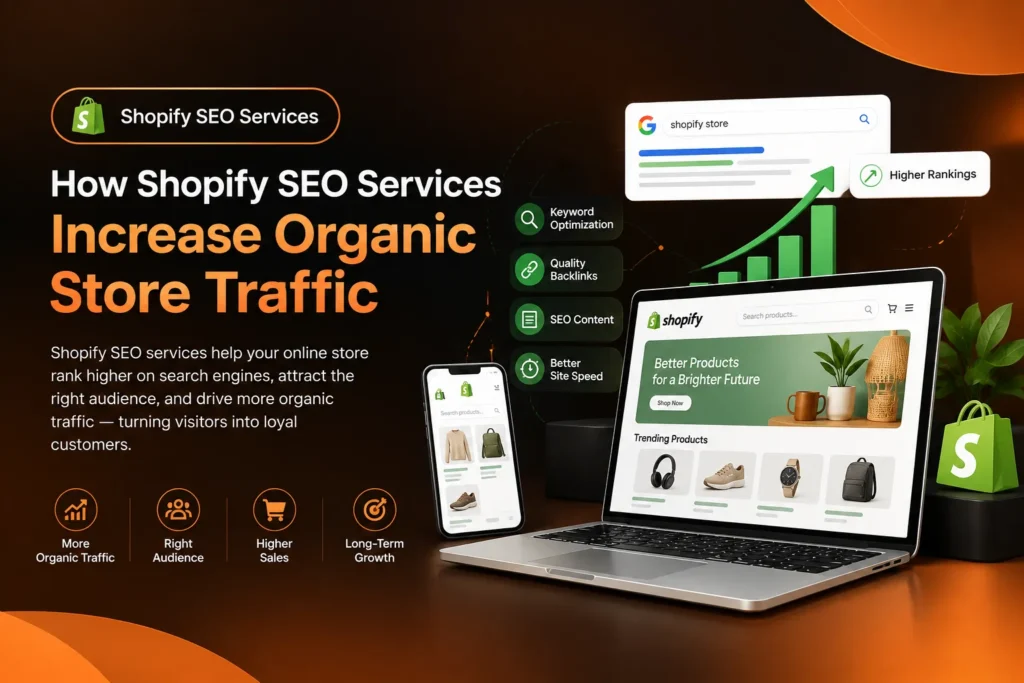
How Shopify SEO Services Actually Grow Traffic
So what’s actually happening behind the scenes when traffic starts climbing? A few specific mechanisms drive most of the growth.
Better keyword matching helps your pages show up for the exact terms shoppers type into Google. Instead of guessing at product descriptions, Shopify SEO services research real search terms and weave them naturally into titles, headers, and product copy.
Stronger internal linking spreads authority across your store. When collection pages link out to related products, and products link back to their collection, Google gets a clearer picture of which pages matter most.
Faster load times keep visitors from bouncing before the page even finishes loading. A slow store loses both rankings and sales, since search engines and shoppers both favor a quick, smooth experience.
Fixing technical errors like broken links, duplicate pages, and missing metadata clears out the confusion that quietly limits how much of your store Google actually indexes and ranks.
Where Traffic Growth Usually Comes From First
Not every part of a Shopify store grows at the same pace once SEO work begins. Here’s a general pattern of where early gains tend to show up.
| Page Type | Typical Growth Timeline | Why It Moves First |
| Collection pages | 4 to 8 weeks | Target broader, higher-volume search terms |
| Blog or guide content | 6 to 12 weeks | Builds topical relevance around your niche |
| Product pages | 8 to 16 weeks | Rely on specific, longer-tail search terms |
| Homepage | 3 to 6 months | Competes for broad brand and category terms |
Looking at this table, it’s clear why patience matters. Collection pages often show movement first, while product pages and the homepage usually take longer to climb since they compete against more established sites.
A Case Worth Learning From
A small home goods store once relied almost entirely on Instagram ads for traffic. The moment their ad budget paused for a month, sales dropped to almost nothing. After bringing in structured Shopify SEO services, cleaning up collection page titles, adding genuinely useful buying guides, and fixing a stack of duplicate URLs caused by product filters, their organic traffic grew steadily over the following months rather than spiking and fading. By the time they paused ads again intentionally to test things, sales barely dipped. That’s the real value of organic growth. It doesn’t disappear the moment you stop spending.
What Slows Organic Growth Down
A few common issues quietly hold back Shopify SEO services from working as fast as they should. Thin, copied product descriptions pulled straight from a supplier catalog give Google almost nothing unique to rank. Missing alt text on product images wastes a real opportunity, since image search brings in extra visitors many stores overlook entirely. And piling on too many apps can slow load times enough to undo progress made elsewhere on the site.
Questions Worth Asking Your SEO Provider
Before trusting anyone with your store’s growth, ask a few pointed questions. How do they track and report traffic growth over time, not just rankings for a handful of keywords? Do they understand Shopify’s specific technical quirks, like automatic duplicate URLs from product variants? And what’s their honest timeline for meaningful results, since anyone promising overnight traffic spikes usually isn’t being straight with you.
A provider confident in their work should walk you through real numbers and explain exactly where your traffic gains are coming from each month, not just hand you a vague report and move on.
Conclusion
Shopify SEO services grow organic traffic by fixing the technical gaps, keyword mismatches, and thin content that quietly hold a store back from ranking. Collection pages tend to move first, followed by blog content and product pages, with steady, compounding growth building over several months rather than overnight. With organic search converting shoppers at nearly three times the rate of paid social, that growth translates directly into sales that don’t disappear the moment a budget pauses. For any Shopify store owner tired of depending entirely on ads, understanding how this traffic actually builds is the first step toward a steadier, more reliable source of customers.
Frequently Asked Questions
How soon will I see organic traffic increase after starting Shopify SEO services?
Most stores see early movement on collection pages within four to eight weeks, with broader growth across the whole site building over three to six months. The exact timeline depends on how competitive your product category is and how much technical cleanup your store needed to begin with. Newer stores with less existing content often take a bit longer to gain traction than established stores with some history already built.
Can Shopify SEO services work alongside paid advertising?
Yes, and many successful stores run both at the same time rather than choosing one over the other. Paid ads bring quick, immediate traffic while organic growth builds a steadier base that keeps working even when ad spend pauses. Over time, many stores find they can gradually reduce ad reliance as organic traffic takes on a bigger share of overall visits.
What’s the biggest mistake stores make that limits organic traffic?
Thin or copied product descriptions are one of the most common issues, since they give search engines almost nothing unique to rank against competitors selling the same products. Ignoring collection page optimization in favor of only working on individual product pages is another frequent misstep. Ignoring page speed and technical errors rounds out the list, since both quietly cap how well even great content can perform.
Do smaller Shopify stores benefit from SEO as much as larger ones?
Yes, and in some ways smaller stores benefit even more since they often compete in narrower niches with less established competition. A focused approach to Shopify SEO services can help a smaller store rank well for specific, less competitive search terms much faster than a larger store chasing broad, crowded keywords. Consistency matters more than store size when it comes to steady organic growth.
How is traffic growth actually measured and reported?
Most providers track organic sessions, keyword rankings, and conversion rates from organic visitors using tools connected directly to your store’s analytics. A good report should show trends over months, not just a single snapshot, since organic growth tends to build gradually rather than jump overnight. Ask your provider to walk through exactly which metrics they track and how often you’ll see updates.