Paid ads bring shoppers the day you pay for them. Then the shoppers stop when the budget stops. Have you ever watched sales fall the week an ad campaign ended? Many store owners have. That is why ecommerce SEO services matter so much for long-term sales growth. They build traffic that keeps coming month after month, without any spend on clicks.
At Rank Fam, our ecommerce SEO services help online stores earn a place in search results the right way. We write clear pages, fix slow sites, and build plans that grow with your shop. In this article, we explain what these services do, why they pay off over time, and how to pick the right team. We use plain words, real numbers, and simple steps.
What Do Ecommerce SEO Services Include?
Ecommerce SEO services are a set of tasks that help your online store show up when people search. Think of it as a shop sign, a clean window, and a clear map, all built for Google. Shoppers type a need into a search box. Search engines pick the pages that fit best. Our job is to make your pages the best fit.
Good ecommerce SEO covers keyword research, product page writing, category page setup, site speed, mobile design, and internal links. It covers structured data too. That is a small piece of code that tells search engines the price, stock, and reviews of a product. Each part supports the others, so skipping one weakens the rest.
Why Search Brings Long-Term Sales
Search is still the front door for most online shops. BrightEdge figures, reported by Search Engine Land, show that organic search brings about 41% of visits to retail sites, while the average across all industries is 53.3%. That is roughly four visits out of every ten arriving from unpaid results.
Here is a fair question. Would you rather rent that traffic or own it? Ads rent attention. Ecommerce SEO services build pages that keep earning. A product page that ranks today can still bring buyers next year. That is how long-term sales growth works for stores that start early.
Ecommerce SEO vs Paid Ads at a Glance
Ads and SEO both have a place. Still, they act very differently over time. A quick look at the main differences helps when you plan a budget for ecommerce SEO services.
| Factor | Paid Ads | Ecommerce SEO |
| Traffic when spending stops | Stops right away | Keeps coming |
| Time to first results | Days | Weeks to months |
| Cost per visit over time | Stays about the same | Often falls as pages rank |
| Shopper trust | Marked as an ad | Earned through useful pages |
| Best use | Launches, sales, quick tests | Steady growth and brand trust |
We do not tell stores to drop ads. We tell them to stop using ads as their only source of sales. A mix is safer. Ecommerce SEO gives the base, and ads add speed when you need it.
Where Stores Lose Sales After the Click
Traffic alone does not pay the bills. Many stores rank well and still miss sales. The leak often sits at the checkout. The Baymard Institute, which studies online checkout design, puts the average cart abandonment rate at 70.19%, based on nearly 50 studies. Almost half of shoppers (48%) said extra costs like shipping, tax, and fees pushed them to leave.
Baymard also estimates that better checkout design could lift conversion for the average large store by 35.26%. Its researchers say many of these problems can be fixed through design changes alone. What does that mean for SEO? Good ecommerce SEO goes beyond rankings. It matches the promise in the search result with what the shopper finds on the page.
So our ecommerce SEO services look at pages after the click, not just before it. If a product page shows a low price, checkout should not add surprise fees. We state delivery costs on the product page itself. That small step builds trust and cuts exits.
Building Blocks of a Plan That Lasts
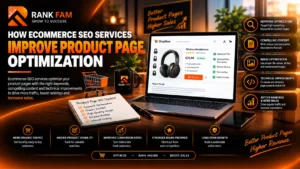
Start with product pages. Each one needs a clear title, a short description written for people, sharp photos with simple alt text, honest reviews, and a visible price and delivery note. Copying a supplier’s text hurts, since many stores post the same words. Fresh writing helps a page stand out, and it is the base of any ecommerce SEO plan.
Category pages deserve the same care. They match broad searches like women’s running shoes. A short buying tip at the top, clear filters, and links to best sellers help shoppers and search engines alike. Strong category pages are a big part of SEO for online stores.
Technical health comes next. Pages should load fast, work well on phones, and avoid duplicate links created by filters. Google’s Core Web Vitals measure load speed, response time, and layout shifts. A store that scores well gives shoppers less reason to leave, which is why technical ecommerce SEO sits in every plan we write.
Content covers what product pages do not. Buying guides, size charts, and comparison posts answer questions before shoppers ask a salesperson. These pages bring in readers early in their search, and they link back to your products. That makes content a quiet engine inside ecommerce SEO services.
Why Long-Tail Keywords Help Smaller Stores
Say a small shop sells hiking boots. Competing for the phrase “hiking boots” means facing huge brands. A longer phrase like “waterproof hiking boots for wide feet” gets fewer searches, but the shopper knows exactly what they want. Fewer rivals and clearer intent mean better odds of a sale.
Over a year, dozens of these small wins add up. Our ecommerce SEO services start with this kind of low-competition keyword research. Then we group related phrases on one page so search engines see the full topic.
How Long Does It Take to See Growth?
Search takes time, and anyone who promises overnight rankings is guessing. Many stores see early movement in the first one to two months. Larger gains build over six to twelve months, depending on the niche and the starting point. Think of it like planting a tree. Roots come first, and shade comes later.
Each month the work stacks up: new pages, fixed errors, better links. That stacking effect is why ecommerce SEO services reward patience. A store that starts now will hold more ground next year than one that waits.
What to Ask Before You Hire a Team
Pick a team that explains its plan in plain words. Ask how they choose keywords, how they report, and if they track sales, not just clicks. Ask for a sample report. Walk away from anyone who guarantees the top spot on Google, since no one controls those results. A trusted ecommerce SEO company shows its steps.
At Rank Fam, we pair SEO with content writing, web development, and ecommerce marketing under one roof. That helps, since pages, speed, and words all shape rankings. A shop in Leeds, Toronto, Perth, or Cape Town faces the same basics: clear pages, quick loading, and honest prices. Our ecommerce SEO services cover all three.
Conclusion
Ecommerce SEO services build traffic that keeps working month after month. Search brings about four in ten retail visits, so ignoring it leaves sales on the table. Strong pages, fast loading, and honest checkout details turn those visits into orders. Results take time, but the gains stack up. Rank Fam is ready to build that plan with you. Start with one page, one keyword, and one fix, then keep going.
FAQs
How much do ecommerce SEO services cost?
Prices depend on store size, the number of products, and how much work the site needs. A small shop with a few dozen products needs less than a store with thousands of pages. Most agencies offer monthly plans, so you pay as the work happens. Ask for a clear list of tasks before you sign, and compare what each plan covers, not just the price.
How long do ecommerce SEO services take to work?
Early changes can show in the first one to two months, such as faster pages and small ranking gains. Bigger sales growth tends to build over six to twelve months. Competition, store age, and past site problems all change the timeline. Steady monthly work beats a one-time push.
Is SEO better than paid ads for an online store?
Neither one wins every time. Ads give fast sales and work well for launches and sale events. SEO builds traffic that lasts after payment stops. Most stores do best with a mix, then move more budget toward SEO as organic sales grow.
Can a small store compete with big brands in search?
Yes, with the right targets. Small stores can win on long-tail phrases that big brands skip, like a product plus a size, a use, or a place. Helpful buying guides and honest reviews build trust too. Over time, these small pages add up to steady traffic.
What should I fix first on my ecommerce site?
Start with pages that already get visits but make few sales. Fix slow load times, thin product text, and missing delivery details. Then check mobile pages, since many shoppers browse on phones. Track revenue per page so you know which fix paid off.