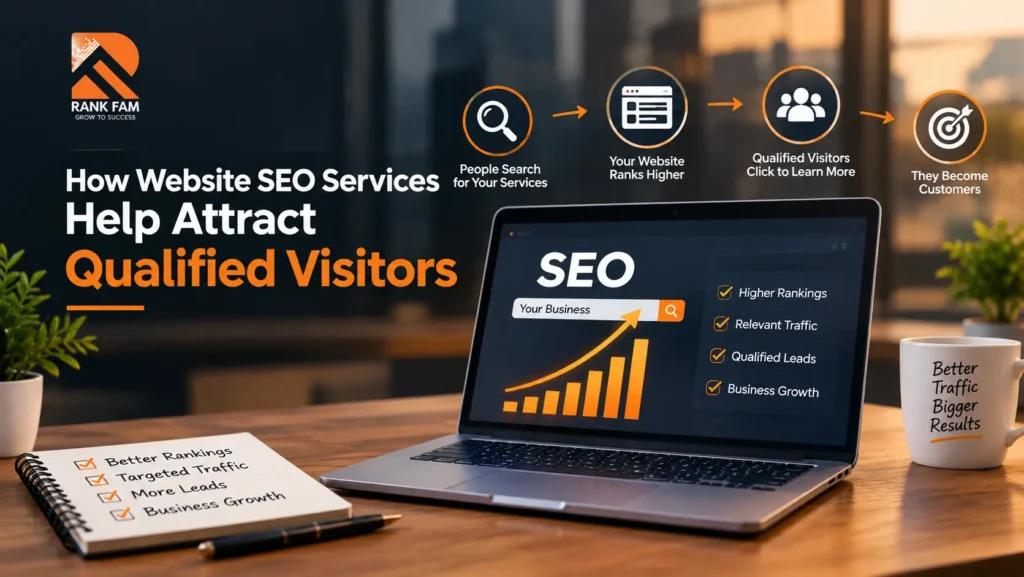
Ever checked your website analytics and felt confused seeing thousands of visitors but almost no sales? That disconnect trips up more businesses than you’d think. Traffic alone doesn’t pay the bills. What actually matters is whether the people landing on your site are the ones who’d want what you sell, and that’s the real job of website SEO services.
At Rank Fam, we’ve worked with businesses that had decent traffic numbers but poor conversion rates, and the fix almost always came down to targeting the wrong keywords or the wrong audience entirely. Website SEO services focus on bringing in visitors who are actually searching for what a business offers, not just anyone who happens to click a link. Let’s look at how this works and why qualified traffic matters so much more than raw numbers.
What “Qualified Visitors” Actually Means
A qualified visitor is someone who arrives at your site already interested in what you’re selling or offering. If you run a plumbing business, a qualified visitor searches for something like “emergency plumber near me,” not “how does a toilet work.” Both searches might land someone on a plumbing website, but only one of them is likely to become a customer.
This distinction is exactly why website SEO services put so much weight on keyword intent, not just keyword volume. A high-traffic keyword that attracts the wrong audience does very little for a business’s bottom line.
How Website SEO Services Target the Right Audience
Getting this right takes more than picking popular search terms. Here’s what the process usually looks like.
1. Researching search intent, not just volume. A keyword with lower search numbers but clear buying intent often brings better results than a high-volume term that attracts casual browsers.
2. Optimizing for local and specific searches. Many businesses get better results targeting detailed, specific phrases instead of broad, competitive ones, since specific searches usually come from people closer to making a decision.
3. Improving on-page content to match user needs. A page needs to answer the actual question a visitor typed in, or they’ll leave and try a different search result.
4. Building a site structure that guides visitors naturally. Good internal linking and clear navigation help qualified visitors find what they need instead of bouncing off the page confused.
A study from HubSpot found that businesses focusing on inbound search strategies see notably lower customer acquisition costs compared to those relying mainly on paid ads.Inbound methods, including organic search, tend to produce leads at a lower average cost than outbound approaches like cold outreach or paid advertising. That gap is one of the clearest reasons businesses invest in website SEO services instead of just running ads and hoping for the best.
Comparing Traffic Quantity vs. Traffic Quality
It helps to see this side by side.
| Factor | High Traffic, Low Intent | Targeted Traffic (Qualified) |
| Visitor numbers | High | Moderate to steady |
| Conversion rate | Low | Higher |
| Keyword competition | Often very high | Lower, more specific |
| Cost to acquire | Expensive over time | More efficient long term |
| Business impact | Vanity metric | Direct revenue impact |
As the table shows, chasing raw traffic numbers without considering intent often leads businesses to spend more while getting less in return. Website SEO services aim to shift that balance toward visitors who are actually likely to convert.
Why Search Intent Changes Everything
Think about the difference between someone searching “types of running shoes” versus “buy trail running shoes size 10.” The first person is still researching. The second person is ready to make a purchase. A site that ranks well for the second phrase, even with fewer total searches, usually brings in far more value than one ranking for the broader term.
This is why our Website SEO Services team at Rank Fam spends real time studying what a client’s ideal customer actually types into a search bar before building a keyword strategy. Skipping this step is one of the most common mistakes businesses make when trying to handle SEO on their own.
A report from Search Engine Journal found that pages optimized around specific, long-tail search phrases often see higher conversion rates than pages targeting broad, generic terms, even when overall traffic volume is lower.Long-tail keyword strategies frequently outperform broad keyword targeting in terms of conversion rate, since they align more closely with what a searcher actually intends to do next. That finding backs up why targeting the right audience matters more than chasing big numbers alone.
Common Mistakes Businesses Make With SEO Targeting
Some businesses jump into SEO without thinking carefully about who they’re trying to reach, and that leads to wasted effort. Targeting broad, highly competitive keywords without considering buyer intent often results in traffic that never converts. Ignoring local search terms costs businesses customers who are searching nearby and ready to buy. Focusing only on traffic volume in reports, without checking conversion data, can hide the fact that a strategy isn’t actually working.
Working with a provider who understands the difference between visibility and value helps businesses avoid pouring money into rankings that don’t translate into real growth.
What to Ask Before Choosing a Provider
Not every agency prioritizes qualified traffic the way they should. Before hiring anyone for website SEO services, ask a few direct questions.
Do they research search intent before building a keyword strategy, or do they just chase high-volume terms? Can they show examples of past clients where traffic led to actual conversions, not just higher numbers? Do they track conversion data alongside traffic reports? And do they adjust strategy based on what’s actually working, rather than sticking to a fixed plan regardless of results?
These questions matter because a provider focused only on traffic numbers can make a report look impressive while your actual business results stay flat.
Conclusion
Website SEO services work best when they focus on attracting visitors who are actually likely to become customers, not just padding traffic numbers for the sake of a good-looking report. Understanding search intent, targeting specific and local phrases, and building content that answers real questions all play a part in bringing in qualified visitors. Businesses that shift their focus from raw traffic to targeted traffic usually see better returns even with smaller visitor counts. Rank Fam builds strategies around this exact idea, because a website full of the right visitors does far more for a business than one full of the wrong ones.
Frequently Asked Questions
What’s the difference between traffic and qualified traffic?
Traffic refers to the total number of visitors landing on a website, regardless of their intent or interest level. Qualified traffic specifically means visitors who are searching for something closely related to what a business offers. The second group is far more likely to convert into leads or customers.
How long does it take to see results from targeted SEO efforts?
Most businesses start noticing meaningful changes in qualified traffic within three to six months, depending on competition and how the site was structured before. Search engines need time to recognize new content and adjust rankings accordingly. Consistent effort tends to produce steadier results than quick, short-term tactics.
Can local businesses benefit from this kind of SEO targeting?
Yes, local businesses often see some of the strongest results, since location-based searches usually come from people ready to make a decision soon. Targeting specific neighborhood or city terms helps these businesses compete without needing to rank for broad national keywords. This approach often costs less while delivering better results.
Is it better to target fewer specific keywords or many broad ones?
Generally, a smaller set of specific, intent-driven keywords performs better than a large list of broad, generic terms. Specific keywords usually face less competition and attract visitors closer to making a decision. This approach also makes it easier to create focused, useful content for each page.
How do I know if my current traffic is actually qualified?
Checking conversion rates, time spent on site, and bounce rates alongside traffic numbers gives a clearer picture than traffic alone. If visitors leave quickly without taking action, that often signals a mismatch between the keywords targeted and what those visitors actually wanted. Reviewing this data regularly helps catch targeting issues before they waste further budget.